Casa Milà (La Pedrera): Gaudí’s Living Stone Façade
Discover the history, design, and experience of Casa Milà (La Pedrera), Gaudí’s landmark of flowing stone and light wells in Barcelona.
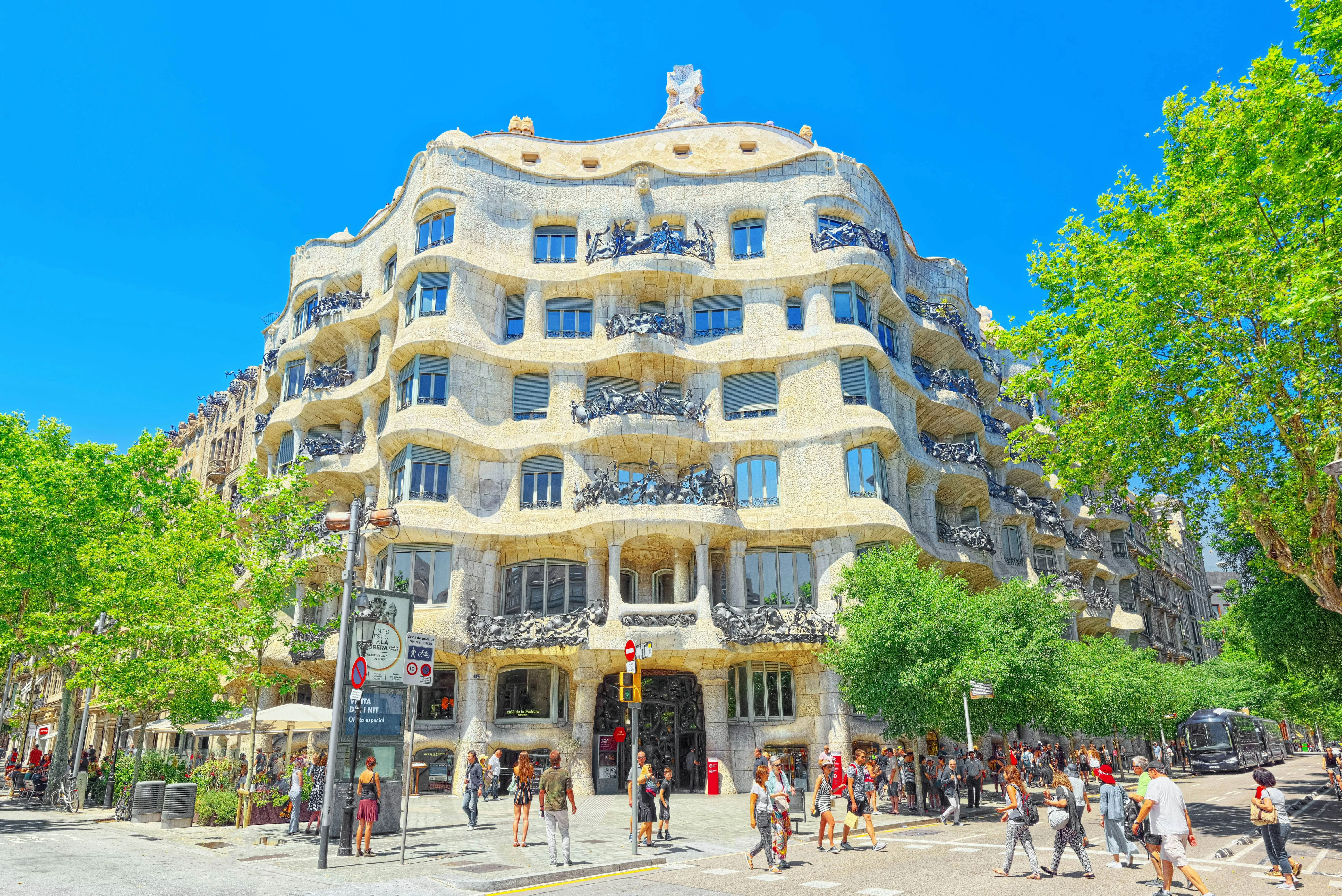
Casa Milà — known affectionately as La Pedrera (the quarry) — is Gaudí’s manifesto for urban living. Commissioned by Pere Milà i Camps and Roser Segimon (1906–1912), it reimagines the apartment block as a breathing organism with undulating stone, iron balconies like seaweed, and light wells that pour daylight to the deepest floors.
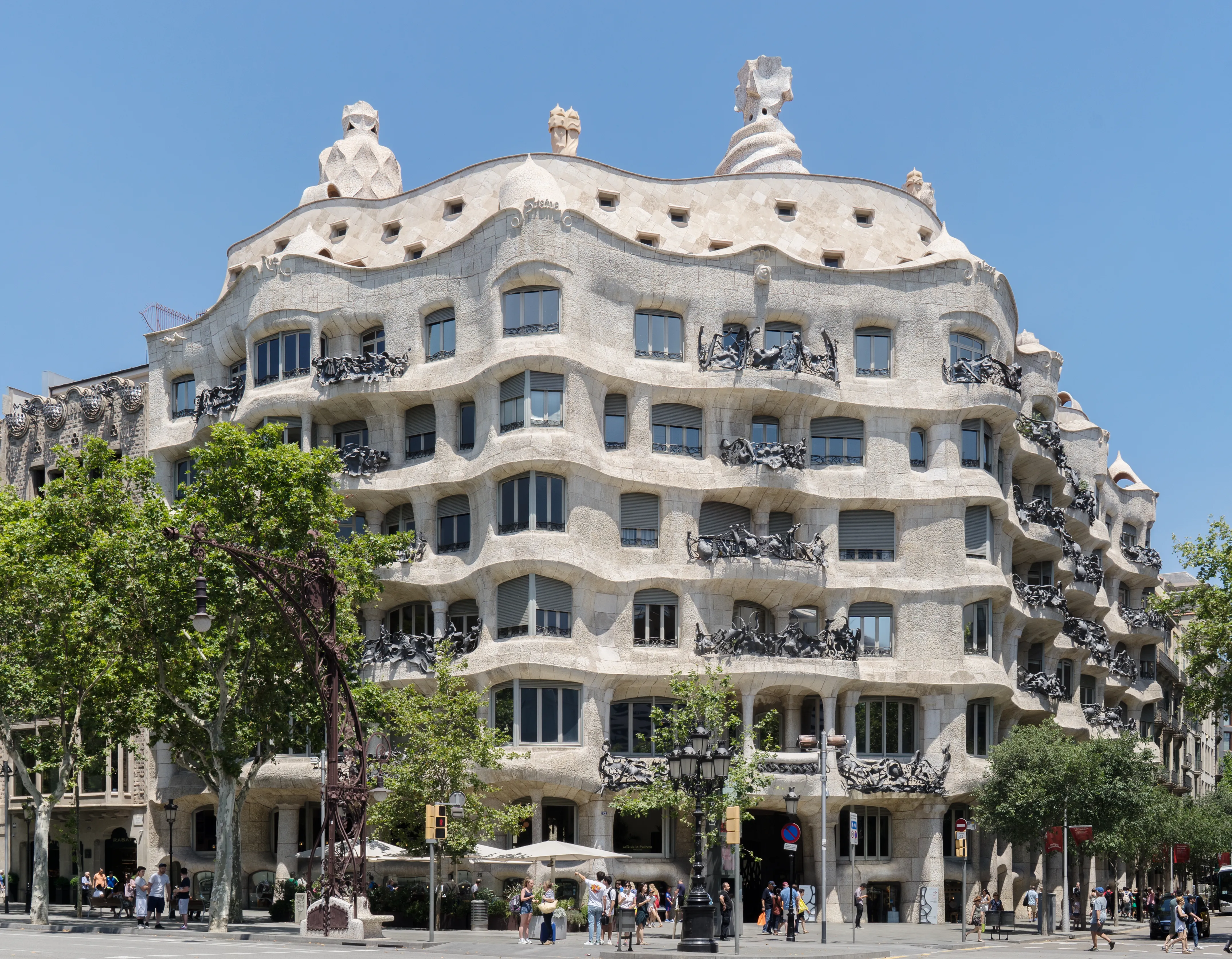
Table of Contents
Why It Matters
- Breaks from flat façades: the stone becomes topography.
- Prioritizes air, light, and circulation through twin courtyards and continuous ramps.
- Synthesizes structure + ornament so they act as one system.
“The straight line belongs to men, the curved one to God.” — often attributed to Gaudí
Anatomy of a Living Building
- Façade: limestone waves, no strict symmetry, ironwork balconies like kelp in a current.
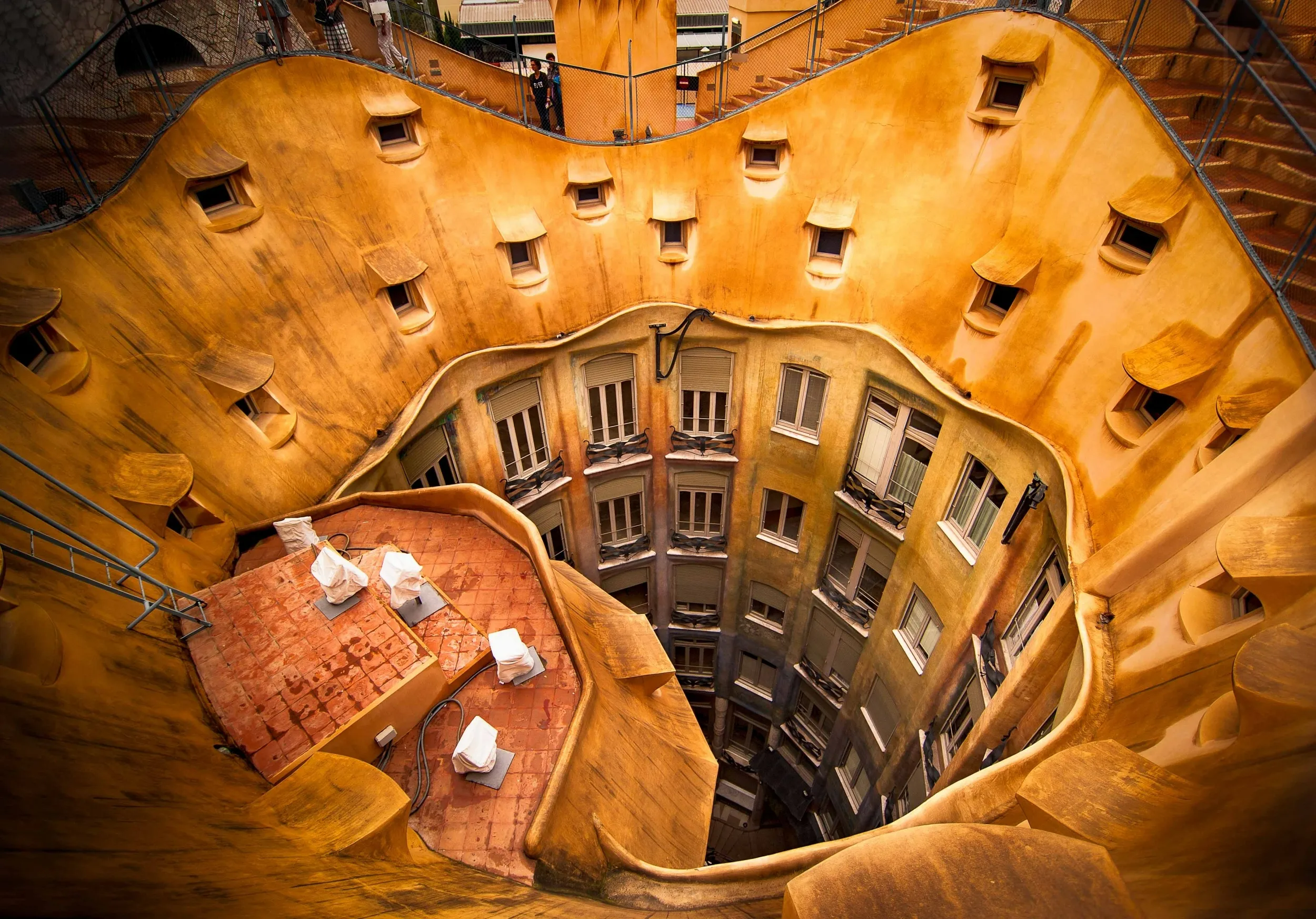
- Courtyards: two light wells as lungs; chromatic plaster amplifies light.
- Rooftop: chimneys as guardians, stair drums as spiral shells, a skyline theatre.
Timeline at a Glance
| Year | Milestone |
|---|---|
| 1906 | Groundbreaking; Gaudí’s team begins |
| 1909–1911 | Structure + façades progress; city ordinance debates |
| 1912 | Substantial completion; finishing continues |
| Late 20th c. | Restoration, museum creation, public opening |
Design Principles
- Health by Design: air, light, and circulation are core.
- Continuous Movement: ramps and curves guide the body.
- Integrated Utilities: ventilation and drainage become sculpture.
Visiting Tips (90–120 min)
- Visit morning for crisp shadow relief on stone; evening for golden hue.
- Don’t miss the attic catenary arches and the rooftop guardians.
- End at the apartment museum to decode daily life and craft.
Photo Spots
- Across Passeig de Gràcia for oblique façade shots.
- Courtyard base looking up for color gradients.
- Rooftop corners for skyline silhouettes.
FAQ
- Is it still residential? Historically yes; today much is museum + cultural space.
- Is La Pedrera accessible? Elevators and ramps support inclusive access.
- Can I visit at night? Yes; see Night Experience posts for details.
[^note]: Terminology follows common usage: Casa Milà = La Pedrera.
About the Author

Architecture Writer
As a Lisbon lover and slow‑travel writer, I put this guide together to help you read the monastery’s stone — from voyages and prayers to poetry and the quiet glow of Belém.
Tags
Comments (0)
Loading comments...