参观时间10:00 AM – 06:30 PM
|星期日, 一月 11, 2026Praça do Império, 1400‑206 Lisboa, Portugal
返回 history
biography
Vasco and Camões at Jerónimos: Tombs Explained
An interpretive walk through the tombs of Vasco da Gama and Luís de Camões—poetry and navigation memorialized.
1/8/2026
12 min read
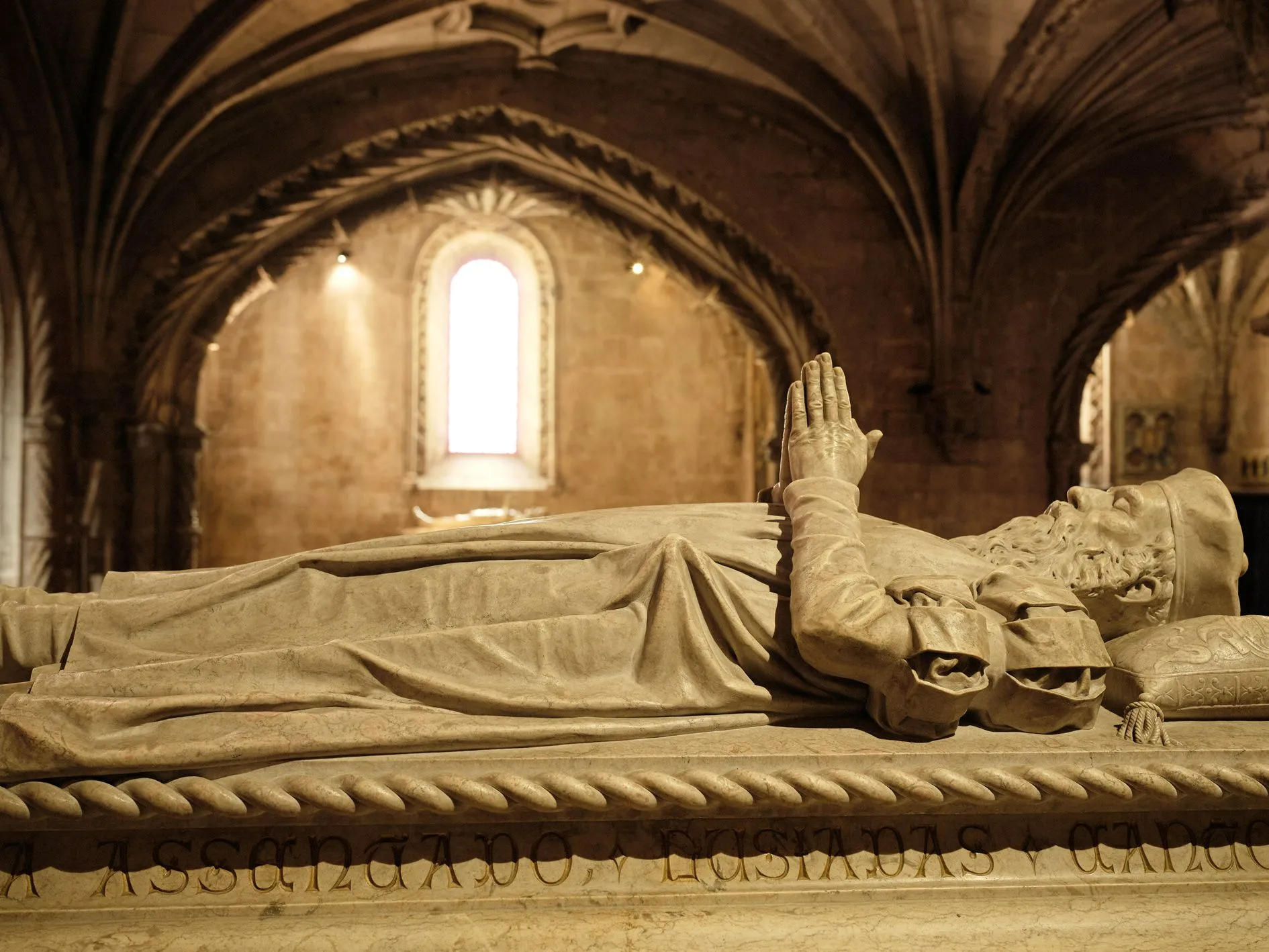
Vasco da Gama (navigation) and Luís de Camões (poetry) form a dual axis of Portuguese identity—voyage and verse housed in carved stone.
🧭 Why Here?
- Jerónimos is the maritime monastery—symbolically apt.
- The church’s nave and transept frame national memory rituals.
- Proximity to the river ties remembrance to departure and return.
🔎 What to Notice
- Armorial bearings and maritime motifs on sarcophagi.
- Placement: sightlines that elevate solemnity.
- Figure carving: restraint and gravity; let the light do the rhetoric.
Where to Stand
- Slightly oblique to a tomb face to catch relief shadows.
- Mid-aisle for an axis view pairing tombs and vaulting.
- Near a column to frame a quiet vignette.
Etiquette: keep voices soft; treat this space as a living memory, not just a photo stop.
Context Notes
- Camões’ “Os Lusíadas” reads as stone rhetoric here: epic themes mirrored in vault, light, and silence.
- Nautical symbols bind personal memory to imperial narrative without shouting.
[^sarc]: Sarcophagi designs often blend classicist and Manueline vocabularies.
作者

Lisbon Heritage Editor
作为里斯本爱好者与慢旅行作者,我撰写此指南,助你‘阅读’修道院的石书——从远航与祈祷到诗意与贝伦的柔光。
Tags
Vasco da Gama
Luís de Camões
Tombs
National memory
Jerónimos Church
Comments (0)
Leave a Comment
Loading comments...