Trang web độc lập, không liên kết với Tu viện Jerónimos.
Lịch mở cửa10:00 AM – 05:30 PM
|Chủ Nhật, Tháng 11 22, 2026Praça do Império, 1400-206 Lisboa, Portugal
Quay lại architecture
style
Manueline Style at Jerónimos: Iconography Explained
A richly illustrated guide to Jerónimos’ Manueline carvings—from nautical ropes to cosmographic spheres—linking art and empire.
1/8/2026
15 min read
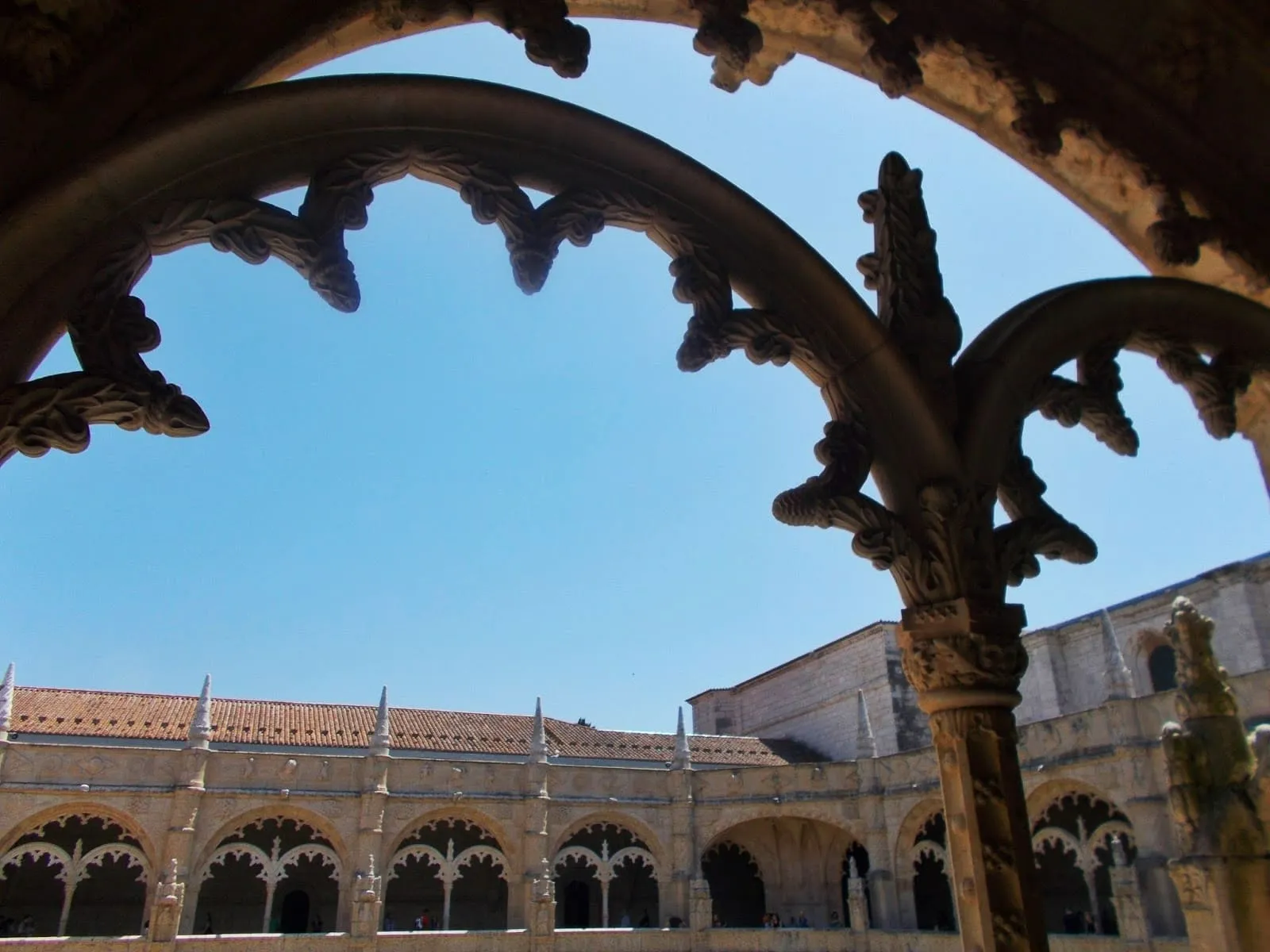
Manueline is Portugal’s late Gothic with global swagger. At Jerónimos, it reads like a stone encyclopedia of maritime signs—cosmography, seamanship, and flora braided into sculptural lace.
🔎 Motifs to Spot
- Rope carvings: twisted frames that cinch portals and windows.
- Armillary spheres: portable cosmos and royal insignia.
- Coral and shell forms: oceanic textures turned sacred.
- Botanical capitals: ferns, acanthus, and local flora.
Tip: Seek small asymmetries—they reveal tool paths, rests, and workshop personalities.
🧠 Reading the Symbols
| Symbol | Meaning | Where | Reading Hint |
|---|---|---|---|
| Rope | Seamanship, binding empire | Portals, cloister frames | Track twist direction to spot different hands |
| Armillary | Cosmography, royal emblem | Façade, portals | Look for scale shifts near narrative figures |
| Coral/Shell | Maritime nature, abundance | Lower-level carvings | Surface pitting mimics porous sea life |
| Plant capitals | Fertility, harmony | Cloister columns | Leaves “stack” in rhythmic tiers |
🛠️ Craft and Material
- Lioz limestone tolerates fine undercutting without crumbling.
- Chisel choreography—point, toothed, flat—tunes light and shadow.
- Workshop marks: discreet signs for payment, logistics, and attribution.[^workshop]
See Like a Conservator
- Check for tool chatter: tiny parallel ridges from toothed chisels.
- Note patina gradients where water runs; salts dull sharp edges.
- Compare repeat motifs on different bays—spot the same template, different hands.
Motif Spotter Card
- Ropes with reversed twists
- Spheres with meridian emphasis
- Coral textures near bases
- Leaf capitals with veining
Try This: Composition Games
- Frame a rope motif as a leading line to an armillary sphere.
- Shoot at a shallow angle to amplify relief shadows.
- On overcast days, go for macro details; in sun, chase cast shadows.
Quick rule: relief depth × raking light = dramatic readability
[^workshop]: Some marks act as production fingerprints—micro-histories of craft guilds.
Về tác giả

Art Historian
Nội dung biên tập độc lập dựa trên thông tin do di tích, UNESCO và Turismo de Lisboa công bố, kèm so sánh sản phẩm đối tác. Cẩm nang không đại diện cho ban quản lý tu viện.
Tags
Manueline
Iconography
Armillary sphere
Rope motifs
Portuguese Renaissance
Comments (0)
Leave a Comment
Loading comments...