Bezoekrooster10:00 AM – 06:30 PM
|Zondag, Januari 11, 2026Praça do Império, 1400‑206 Lisboa, Portugal
Terug naar history
biography
Vasco and Camões at Jerónimos: Tombs Explained
An interpretive walk through the tombs of Vasco da Gama and Luís de Camões—poetry and navigation memorialized.
1/8/2026
12 min read
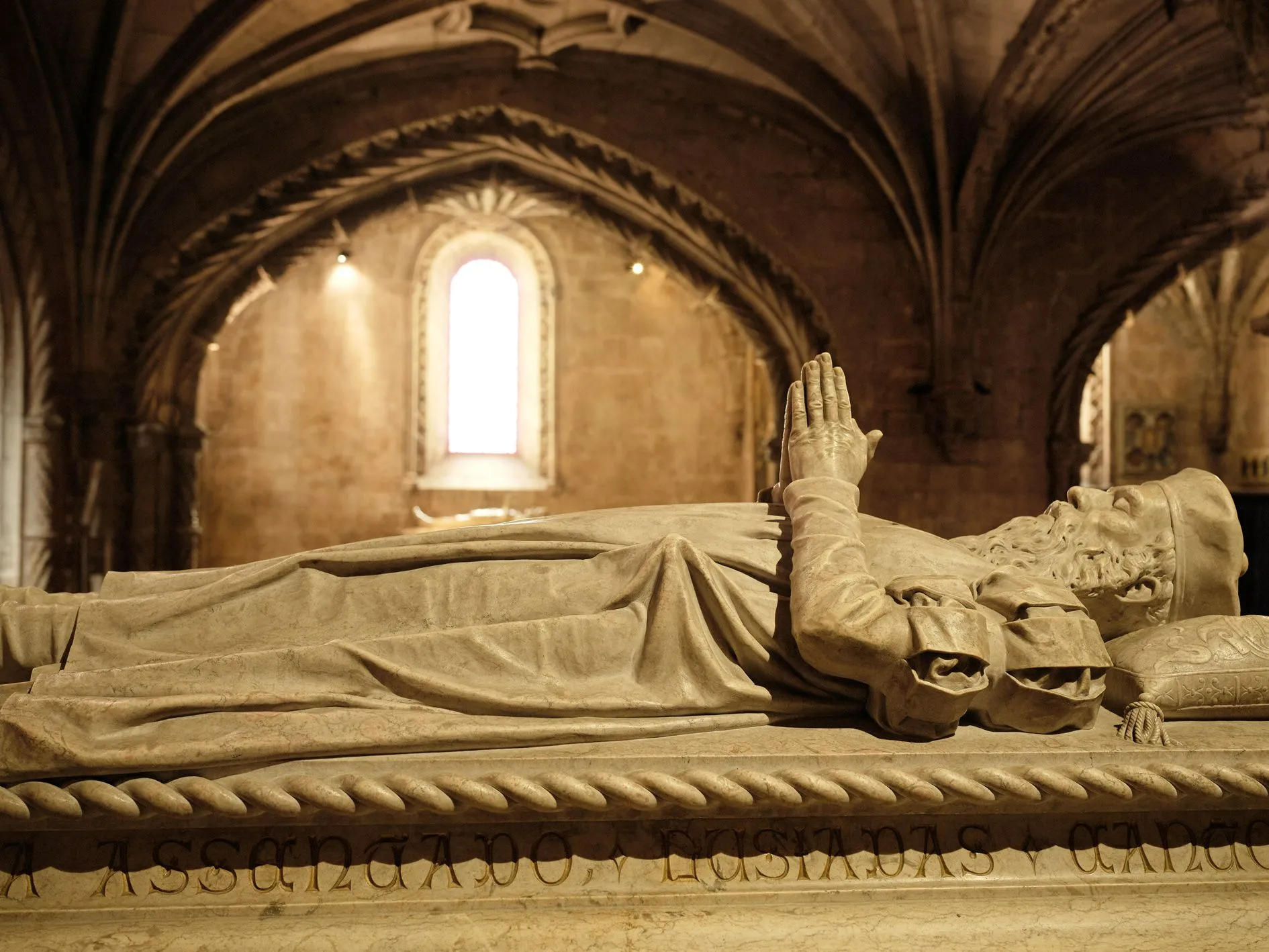
Vasco da Gama (navigation) and Luís de Camões (poetry) form a dual axis of Portuguese identity—voyage and verse housed in carved stone.
🧭 Why Here?
- Jerónimos is the maritime monastery—symbolically apt.
- The church’s nave and transept frame national memory rituals.
- Proximity to the river ties remembrance to departure and return.
🔎 What to Notice
- Armorial bearings and maritime motifs on sarcophagi.
- Placement: sightlines that elevate solemnity.
- Figure carving: restraint and gravity; let the light do the rhetoric.
Where to Stand
- Slightly oblique to a tomb face to catch relief shadows.
- Mid-aisle for an axis view pairing tombs and vaulting.
- Near a column to frame a quiet vignette.
Etiquette: keep voices soft; treat this space as a living memory, not just a photo stop.
Context Notes
- Camões’ “Os Lusíadas” reads as stone rhetoric here: epic themes mirrored in vault, light, and silence.
- Nautical symbols bind personal memory to imperial narrative without shouting.
[^sarc]: Sarcophagi designs often blend classicist and Manueline vocabularies.
Auteur

Lisbon Heritage Editor
Als liefhebber van Lissabon en slow travel heb ik deze gids gemaakt om je te helpen de steen van het klooster te lezen — van reizen en gebeden tot poëzie en het zachte licht van Belém.
Tags
Vasco da Gama
Luís de Camões
Tombs
National memory
Jerónimos Church
Comments (0)
Leave a Comment
Loading comments...