Plan Your Visit to Jerónimos Monastery: Complete Detailed Guide
A long, practical, narrative guide to planning Jerónimos Monastery: ideal arrival windows, ticket logic, queue strategy, route flow, accessibility, etiquette, photography timing, and Belém pairings.
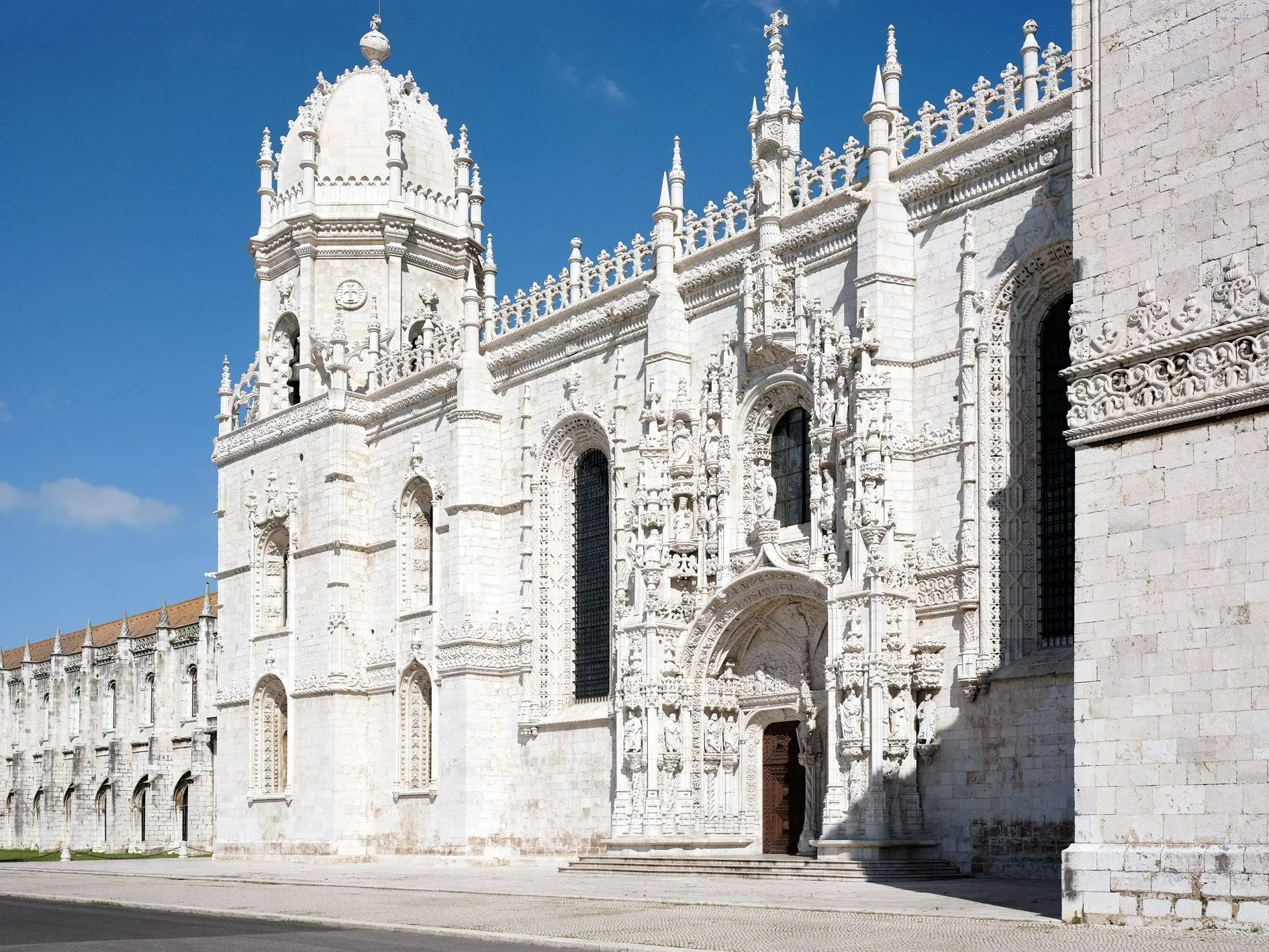
If Jerónimos Monastery is on your Lisbon list, you are already making a good decision. If you plan it well, it becomes one of the most elegant and memorable visits in the city. If you plan it poorly, it can still be beautiful, but your day may get consumed by waiting, heat, and avoidable crowd pressure.
This guide is written as a real-world planning companion, not a short brochure. Think of it as a calm walkthrough of the decisions that actually matter: what time to arrive, which line you are joining, how to move inside, when to switch to church or cloister first, and how to leave Belém with energy still in your day.
Why Jerónimos Requires Strategy
Jerónimos is not difficult to understand. It is difficult to time.
The monument itself is readable and walkable. The challenge is external pressure: synchronized tour waves, late-morning compression, church queue spikes, and transport arrival bunching from central Lisbon. Most visitors do not lose time inside the site; they lose time before crossing the threshold.
That is why this article focuses on sequence, pacing, and decision points.
The One Principle to Remember
If you remember only one thing, remember this:
Protect your arrival window first.
Everything else is secondary. Ticket type, route order, photography goals, and nearby attractions all perform better when you begin in a low-friction time band.
Quick Planning Snapshot (High-Value Basics)
- Best low-stress windows are usually opening slots and late-afternoon entries.
- Most difficult pressure often appears from late morning to early afternoon.
- Tuesday can be denser because of Monday closure effects.
- Typical interior visit runs around 45-60 minutes.
- A fuller first-time visit usually needs 75-100 minutes.
- The church and cloister can involve different queue dynamics.
Before You Go: Build the Day Backbone
Start planning your Jerónimos visit by deciding three things in advance:
- Target time band (opening, mid-morning, afternoon, late afternoon).
- Visit intensity (quick highlights vs deep route).
- Belém pairing ambition (Jerónimos only, half-day, or full cultural circuit).
Without these three decisions, you are likely to improvise at the worst possible moment: while standing in a queue, under sun, with the clock moving.
How to Reach Jerónimos Without Starting Stressed
Belém is straightforward to reach, but predictability matters more than romance when your entry window is fixed.
- Tram routes are practical and iconic, but can bunch with demand.
- Train access can be very efficient depending on your starting zone.
- Bus links can be smoother than expected in certain time bands.
- Rideshare/taxi can be useful for first-slot reliability.
If your slot is early, choose the transport option with the most reliable arrival time, not the most scenic transfer.
Timing Reality: Good Windows vs Hard Windows
Usually Better Windows
- First slots after opening.
- Late afternoon when midday compression softens.
- Midweek bands that avoid peak crossover moments.
Usually Harder Windows
- Late morning to early afternoon in busy seasons.
- Tuesday late morning after Monday closure.
- High-demand holiday periods.
This does not mean hard windows are impossible. It means you should lower expectations for speed and raise your buffer time.
Queue Intelligence: Understand Which Line You Are Actually In
One of the most common planning mistakes is treating Jerónimos as a single queue experience. In practice, you may face different movement streams with different behavior.
Stream 1: Pre-booked / timed-entry flow
- Usually more stable than on-the-day purchase flow.
- Still subject to control waits during pressure peaks.
- Works best when combined with low-friction time bands.
Stream 2: On-the-day purchase flow
- More volatile and often slower at peak demand.
- Can consume time needed for other Belém priorities.
- Better to avoid if your day has multiple anchors.
Stream 3: Church access flow
- Often behaviorally separate from cloister visit dynamics.
- Free access does not guarantee immediate access.
- Can spike sharply at specific periods.
Ticket Strategy: Choose for Friction, Not Hype
Choose ticket style based on your travel temperament and day structure.
Standard entry
Best for independent visitors with flexible pace and self-guided confidence.
Entry plus audio support
Best for first-time visitors who want interpretive context without fixed group cadence.
Guided format
Best for high-demand days, symbolism-heavy interest, or travelers who prefer a curated narrative with fewer decision points.
Important note: so-called skip-the-line products often reduce purchase friction, but they do not always remove security or access-control waits.
Build a Route That Protects Your Energy
Your route should do two things:
- Reduce unnecessary backtracking.
- Keep you ahead of crowd bunching nodes.
Strong default route
- Exterior orientation (short but intentional).
- Cloister lower level.
- Cloister upper level.
- Choir and supporting interiors when available.
- Church segment based on live queue conditions.
Flow logic: Exterior read -> Core monument block -> Vertical transition -> Queue reassessment -> Church add-on

Church First or Cloister First? Use Live Conditions
There is no universal winner. The right answer depends on what the line looks like at your arrival moment.
Choose Church First when
- The church line is clearly short.
- You value sacred interior atmosphere before crowd buildup.
- You want to front-load the symbolic anchor.
Choose Cloister First when
- Church line is already dense.
- You want to secure your paid-route core experience first.
- You prefer controlling certainty before optional queue exposure.
Both approaches are valid. Good planning is adaptive, not rigid.
How Long to Budget (Realistic Bands)
Efficient highlights visit
45-60 minutes inside, limited pause depth, focused path.
Balanced first-time visit
75-100 minutes with church, upper-level pauses, and photography moments.
Deep reading visit
100-130 minutes for slower observation, iconography study, and contemplative pacing.
Always add transition and queue buffer on top of these durations.
Narrative Walking Script (If You Like Story-Led Visits)
If you enjoy meaningful pacing, use this interior script:
- Threshold pause: stop for 20-30 seconds to let your eyes adapt.
- Scale read: take one slow glance from base to vaulting.
- Motif hunt: spot rope, sphere, botanical carving in one segment.
- Rhythm walk: move one full side slowly without backtracking.
- Stillness minute: stand quietly in one corner and listen.
This tiny structure transforms the visit from box-checking into memory-making.
Photography Without Breaking Flow
Most visitors over-photograph early and under-observe later. Invert that.
- Take establishing frames quickly at first.
- Keep camera down while moving through dense transitions.
- Save detail shooting for calmer corners.
- Use upper-level moments for cleaner composition lines.
In bright conditions, protect limestone highlights. In overcast conditions, prioritize texture and shallow-relief detail.
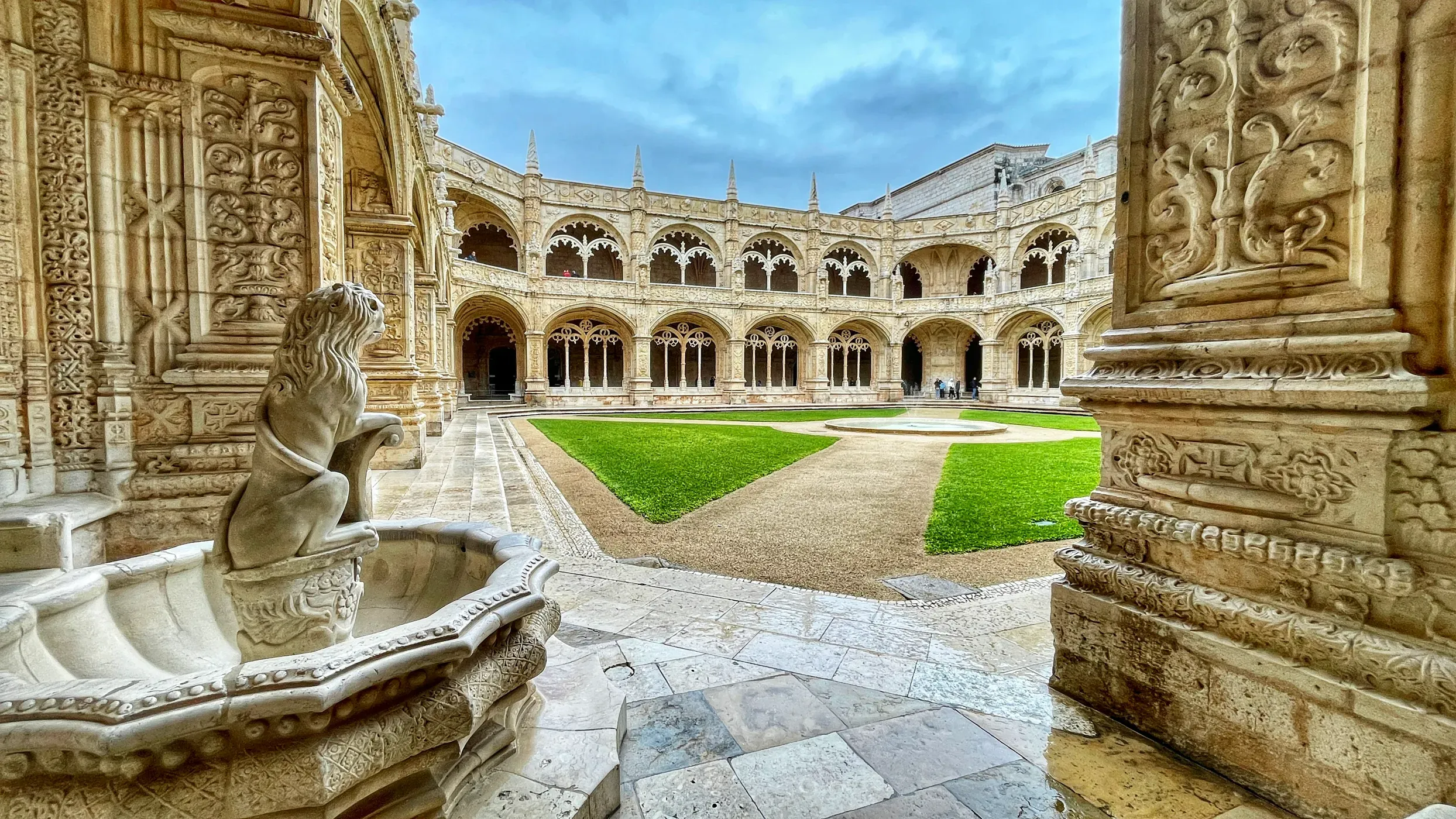
Accessibility and Comfort: Practical Notes That Matter
Jerónimos is manageable for many travelers, but comfort quality depends on preparation.
- Wear stable shoes for stone surfaces and threshold transitions.
- Keep load light; bulky bags can slow entry movement.
- Hydrate before queue exposure in warm months.
- Use shade logic outdoors and deliberate pacing indoors.
For mobility-specific needs, checking latest on-site support options before arrival can reduce uncertainty and decision fatigue at entry points.
Families: Keep It Mission-Based
Children engage better with short visual missions than with long historical monologues.
Try this 3-part family challenge:
- Find three maritime symbols.
- Compare two similar carvings and name one difference.
- Choose one favorite corner and explain why.
This keeps attention active and preserves emotional energy.
Etiquette That Improves Everyone’s Visit
Jerónimos is both monument and meaningful sacred heritage environment.
- Keep voices low in reflective zones.
- Avoid touching carved surfaces.
- Respect directional flow where indicated.
- Follow local guidance for photography restrictions in sensitive areas.
Small discipline creates large quality improvements for everyone.
Mistakes That Cause Most Bad Jerónimos Days
- Arriving in the busiest band without a buffer.
- Treating church and cloister as one queue reality.
- Trying to pair too many Belém stops before securing Jerónimos.
- Overcommitting to photos early and rushing later.
- Assuming transport timing is always predictable.
If you avoid these five, your odds of a smooth visit rise dramatically.
Pairing Jerónimos with Belém (Without Overloading)
After Jerónimos, Belém offers excellent continuation options. The key is pacing, not ambition.
Low-stress half-day sequence
Jerónimos core visit
Short forecourt reset
Belém Tower or one museum anchor
Food stop
River walk or transport continuation
If queues were heavier than expected
Cut one secondary stop and preserve your mood. A shorter, calmer day is better than a rushed checklist day.

Rainy-Day and Hot-Day Adjustments
Rainy day
- Start indoors first.
- Use compact gear and safer movement pacing.
- Turn exterior segments into short transitions, not long holds.
Hot day
- Prioritize early slots and hydration.
- Minimize exposed queue periods where possible.
- Shift long outdoor legs to later cooler windows.
Weather changes route shape, not visit quality.
A Complete Decision Checklist (Night Before)
- Entry window chosen and backed by transport timing.
- Ticket format matched to your pace style.
- Church-first vs cloister-first logic prepared.
- Time budget includes queue and transition buffers.
- Dress and bag choices aligned with site expectations.
- One realistic Belém continuation plan set.
If all six are done, you are in an excellent position.
Final Narrative Takeaway
Jerónimos rewards visitors who move with intention. You do not need a complicated plan. You need a disciplined one: protect arrival time, read live queues correctly, route yourself with purpose, and leave enough margin for beauty.
Because that is the quiet secret of this monument: its power does not come from rushing through details. It comes from allowing stone, light, and space to unfold at a human pace.
Plan well, arrive calmly, and Jerónimos will likely become one of the strongest memories of your Lisbon journey.
[^timing]: Queue behavior changes with seasonality, weekday patterns, and citywide visitor flows.
[^flow]: Route quality is usually a function of sequencing, not speed.
[^respect]: Conservation-friendly behavior by visitors supports long-term heritage care.
About the Author

Travel Planner
As a Lisbon lover and slow‑travel writer, I put this guide together to help you read the monastery’s stone — from voyages and prayers to poetry and the quiet glow of Belém.
Tags
Comments (0)
Loading comments...