Jerónimos Monastery: Origins, Commission, and Maritime Context
A comprehensive origin story of the Jerónimos Monastery—its royal commission, spiritual mission, and maritime symbolism at the dawn of global exploration.
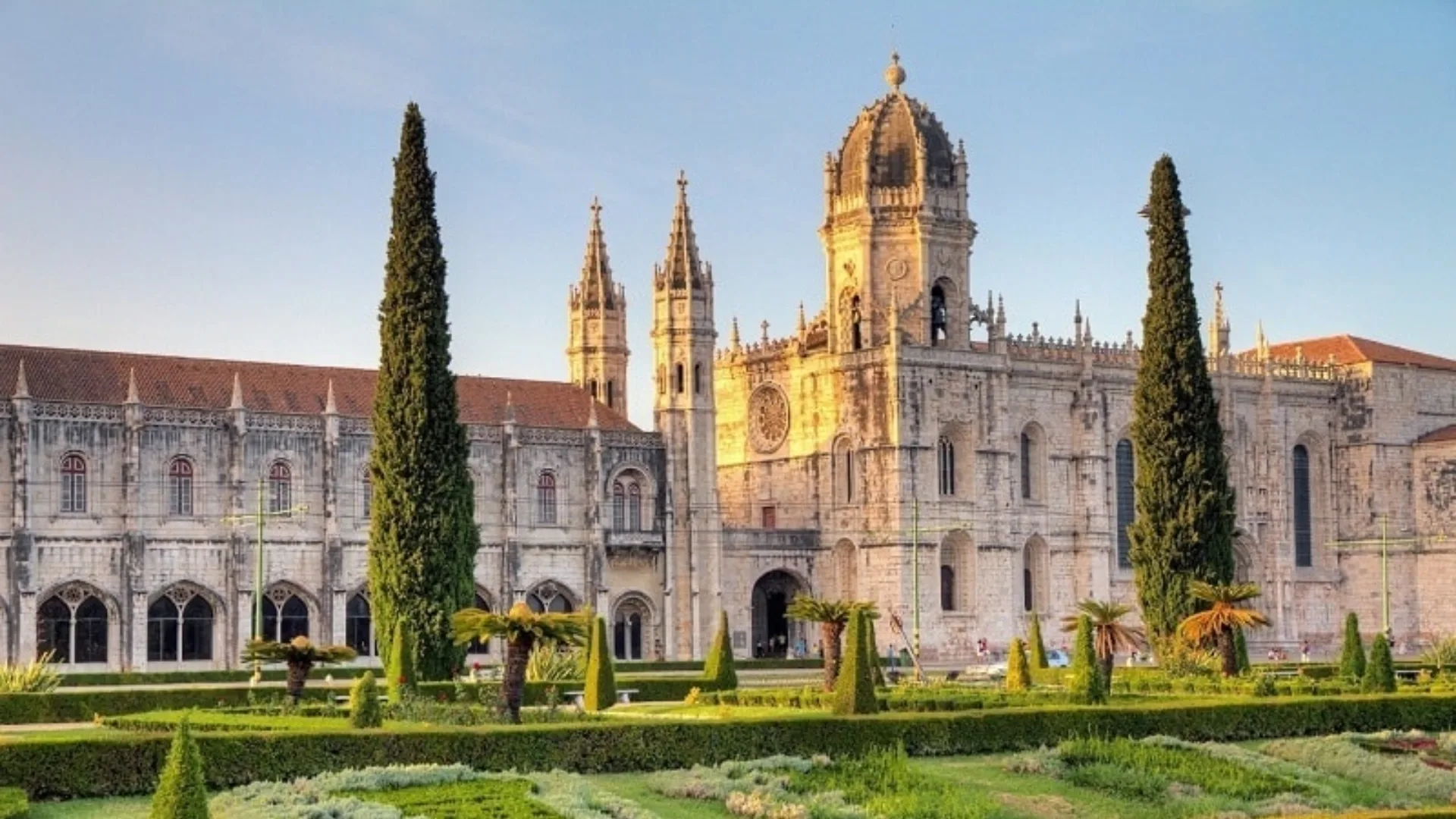
The Jerónimos Monastery (Mosteiro dos Jerónimos) is the ceremonial front porch of Portugal's Age of Discoveries—a place where statecraft, seamanship, and spirituality are carved into stone. Commissioned by King Manuel I in the early 16th century, this monumental complex celebrates the departure of Vasco da Gama and the spiritual guardianship of the Hieronymite Order.
At a Glance
- Purpose: royal pantheon, monastery, maritime memorial, diplomatic stage.
- Style: late Gothic/early Renaissance with a distinct Manueline vocabulary.
- Material: lioz limestone—dense, luminous, and highly workable.
- Order: Hieronymites, committed to prayer for sailors and travelers.
- Urban setting: Belém’s river edge, at Lisbon’s western threshold.
Tip: Arrive from the river side. The monastery’s profile reads best against the open sky and water.
🏛️ Commission, Intent, and Funding
- Patron: King Manuel I (r. 1495–1521), consolidating power after a golden wave of maritime successes.
- Spiritual charge: house the Hieronymite monks, who would pray for navigators and serve travelers.
- Functional program: a royal pantheon and a monastery that embodied imperial ambition.
- Revenue logic: tithes from maritime trade, indulgences, and crown patronage sustained large campaigns.[^finance]
Jerónimos is architecture as policy—a stone manifesto of maritime power.
🧭 Maritime Catalyst
- Vasco da Gama prayed at the older church of Santa Maria de Belém before sailing.
- The new complex memorialized safe crossings, trade winds, and providence.
- Iconography acts like a nautical chart carved in limestone: ropes, armillary spheres, corals, and botanical medleys.
Quick Symbols Primer
- Armillary sphere → cosmography and royal emblem
- Rope motif → seamanship, binding, and craft virtuosity
- Coral/shell textures → oceanic nature made sacred
- Botanical capitals → fertility, order, and local ecology
🪨 Material and Style
- Lioz limestone: creamy, dense, and durable; allows crisp undercuts and soft light diffusion.
- Manueline style: exuberant surface with maritime and cosmographic motifs, absorbing late Gothic structures and early Renaissance detail.
- Workshop system: master builders (e.g., Diogo Boitaca, João de Castilho), carvers, and guilds operating under royal oversight.
Pro tip: Overcast days are great—diffuse light brings out shallow carving.
🗺️ Extended Timeline
- c. 1501: Groundbreaking at Belém.
- 1502–1517: Major campaign under Boitaca and Castilho; church shell and cloister advances.
- Mid–late 16th c.: Portal programs refined; cloister detailing intensified.
- 17th–18th c.: Stabilizations; gradual maintenance of carvings.
- 1755: Earthquake effects and subsequent repairs.
- 19th c.: Restoration drives emphasizing stylistic unity.
- 20th–21st c.: Conservation labs, moisture/salt monitoring, and visitor management.
What to Look For On Site
- West portal: a sculptural “prologue” with maritime and sacred themes.
- Nave interior: slender columns and hovering vaults; light glows, not glares.
- Cloister corners: spandrels with micro-stories; look for workshop marks.[^workmarks]
- Armillary spheres: count variants and placements; note scale shifts.
- Surface weathering: read time in softened edges and mineral blooms.
Visitor Flow and Rhythm
- Start outside for a long façade read, then step into the nave for spatial contrast.
- Move to the cloister: do a clockwise lap on the lower level, then the upper.
- Finish at the forecourt: use the fountain as a “visual palate cleanser.”
Suggested route: Forecourt → West Portal → Nave → Choir → Cloister (lower/upper) → Forecourt
FAQ
Why Belém?
Belém was Lisbon’s maritime threshold—close to shipyards, customs, and the open river light. The monastery’s siting aligns spiritual care with sea-borne departures and arrivals.Is Manueline a style or a moment?
Both. It’s a late Gothic structural language enriched by motifs of global navigation, flourishing under Manuel I. Think of it as a crossfade between Gothic mechanics and Renaissance detailing.[^icon]: The armillary sphere—Portugal’s emblem—appears repeatedly as a cosmographic sign.
[^finance]: Maritime taxes and trade tithes underwrote the monastery’s large campaigns.
[^workmarks]: Small engraved symbols often function as workshop signatures and accounting marks.
About the Author

Lisbon Heritage Editor
As a Lisbon lover and slow‑travel writer, I put this guide together to help you read the monastery’s stone — from voyages and prayers to poetry and the quiet glow of Belém.
Tags
Comments (0)
Loading comments...