Visiting timetableClosed
|Saturday, January 10, 2026Praça do Império, 1400‑206 Lisboa, Portugal
Back to architecture
style
Manueline Style at Jerónimos: Iconography Explained
A richly illustrated guide to Jerónimos’ Manueline carvings—from nautical ropes to cosmographic spheres—linking art and empire.
1/8/2026
15 min read
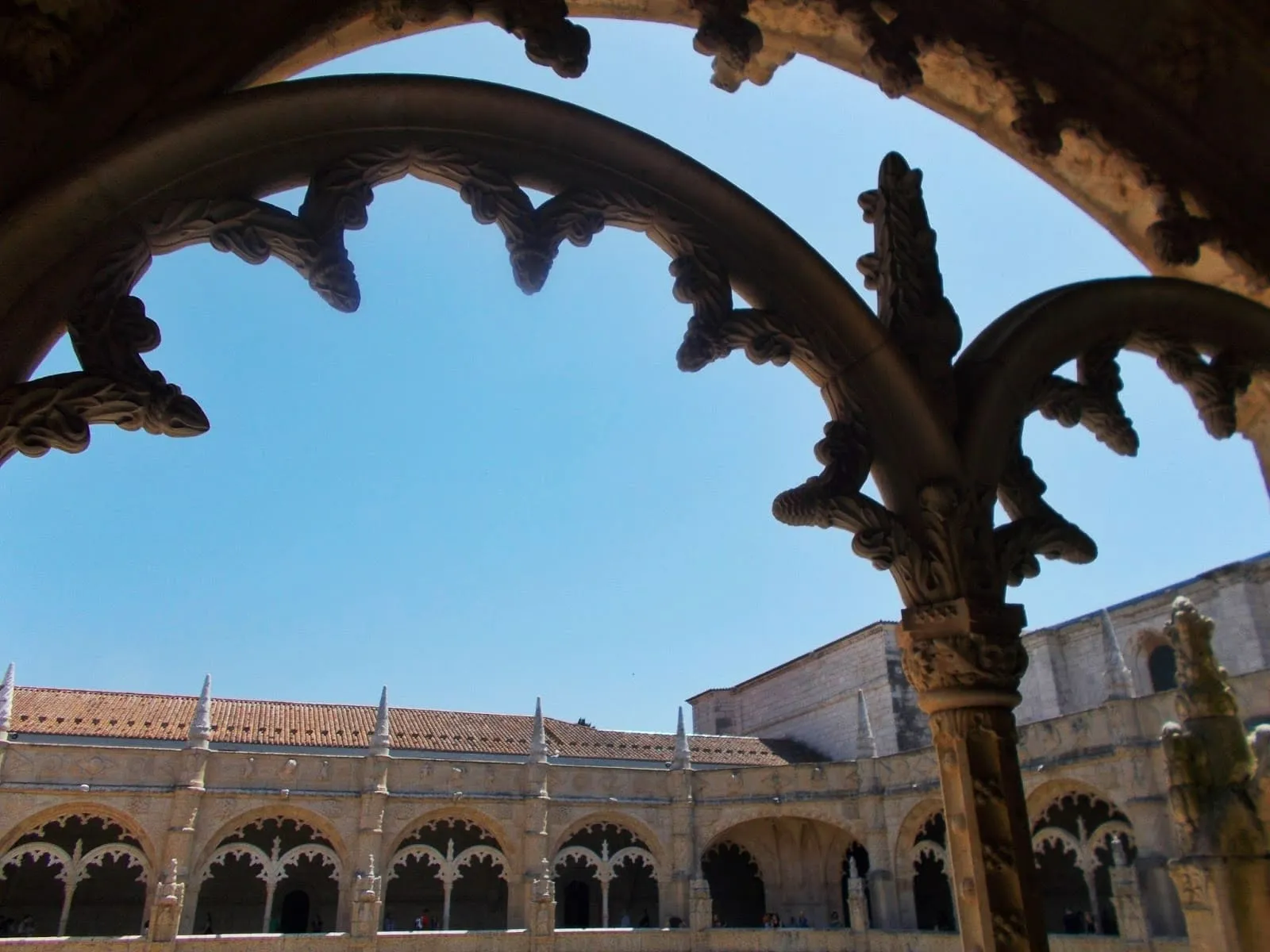
Manueline is Portugal’s late Gothic with global swagger. At Jerónimos, it reads like a stone encyclopedia of maritime signs—cosmography, seamanship, and flora braided into sculptural lace.
🔎 Motifs to Spot
- Rope carvings: twisted frames that cinch portals and windows.
- Armillary spheres: portable cosmos and royal insignia.
- Coral and shell forms: oceanic textures turned sacred.
- Botanical capitals: ferns, acanthus, and local flora.
Tip: Seek small asymmetries—they reveal tool paths, rests, and workshop personalities.
🧠 Reading the Symbols
| Symbol | Meaning | Where | Reading Hint |
|---|---|---|---|
| Rope | Seamanship, binding empire | Portals, cloister frames | Track twist direction to spot different hands |
| Armillary | Cosmography, royal emblem | Façade, portals | Look for scale shifts near narrative figures |
| Coral/Shell | Maritime nature, abundance | Lower-level carvings | Surface pitting mimics porous sea life |
| Plant capitals | Fertility, harmony | Cloister columns | Leaves “stack” in rhythmic tiers |
🛠️ Craft and Material
- Lioz limestone tolerates fine undercutting without crumbling.
- Chisel choreography—point, toothed, flat—tunes light and shadow.
- Workshop marks: discreet signs for payment, logistics, and attribution.[^workshop]
See Like a Conservator
- Check for tool chatter: tiny parallel ridges from toothed chisels.
- Note patina gradients where water runs; salts dull sharp edges.
- Compare repeat motifs on different bays—spot the same template, different hands.
Motif Spotter Card
- Ropes with reversed twists
- Spheres with meridian emphasis
- Coral textures near bases
- Leaf capitals with veining
Try This: Composition Games
- Frame a rope motif as a leading line to an armillary sphere.
- Shoot at a shallow angle to amplify relief shadows.
- On overcast days, go for macro details; in sun, chase cast shadows.
Quick rule: relief depth × raking light = dramatic readability
[^workshop]: Some marks act as production fingerprints—micro-histories of craft guilds.
About the Author

Art Historian
As a Lisbon lover and slow‑travel writer, I put this guide together to help you read the monastery’s stone — from voyages and prayers to poetry and the quiet glow of Belém.
Tags
Manueline
Iconography
Armillary sphere
Rope motifs
Portuguese Renaissance
Comments (0)
Leave a Comment
Loading comments...